
ChemoPort insertion procedures
ChemoPort insertion procedures
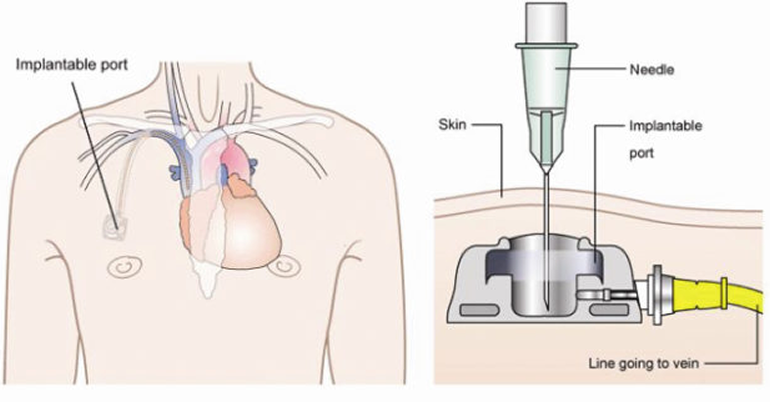
ChemoPort insertion is a minor surgical procedure that places a small, implantable device under the skin to provide long-term, reliable access for chemotherapy, blood draws, and intravenous medications. This device, also known as a totally implantable venous access device (TIVAD), minimizes discomfort from frequent needle sticks and reduces the risk of vein damage. A small titanium or plastic reservoir placed under the skin, typically in the upper chest. A soft, flexible tube that connects the port to a large vein, usually the subclavian vein or jugular vein, allowing direct access to the bloodstream.
The patient undergoes a physical exam and imaging tests (ultrasound/X-ray) to identify the best placement site. ocal anesthesia or mild sedation is given to ensure comfort during the procedure. The catheter is inserted into a large vein and guided to the superior vena cava using fluoroscopic imaging. Prevents repeated needle sticks and reduces vein irritation. Provides easy, quick access for chemotherapy sessions. Unlike external catheters, a ChemoPort is completely under the skin, reducing infection risk. A small device that does not interfere with daily activities.
ChemoPort insertion is a safe, effective, and minimally invasive procedure that enhances chemotherapy delivery while improving patient comfort. It reduces treatment-related stress by providing secure, long-term vein access, allowing patients to focus on healing and recovery.

